


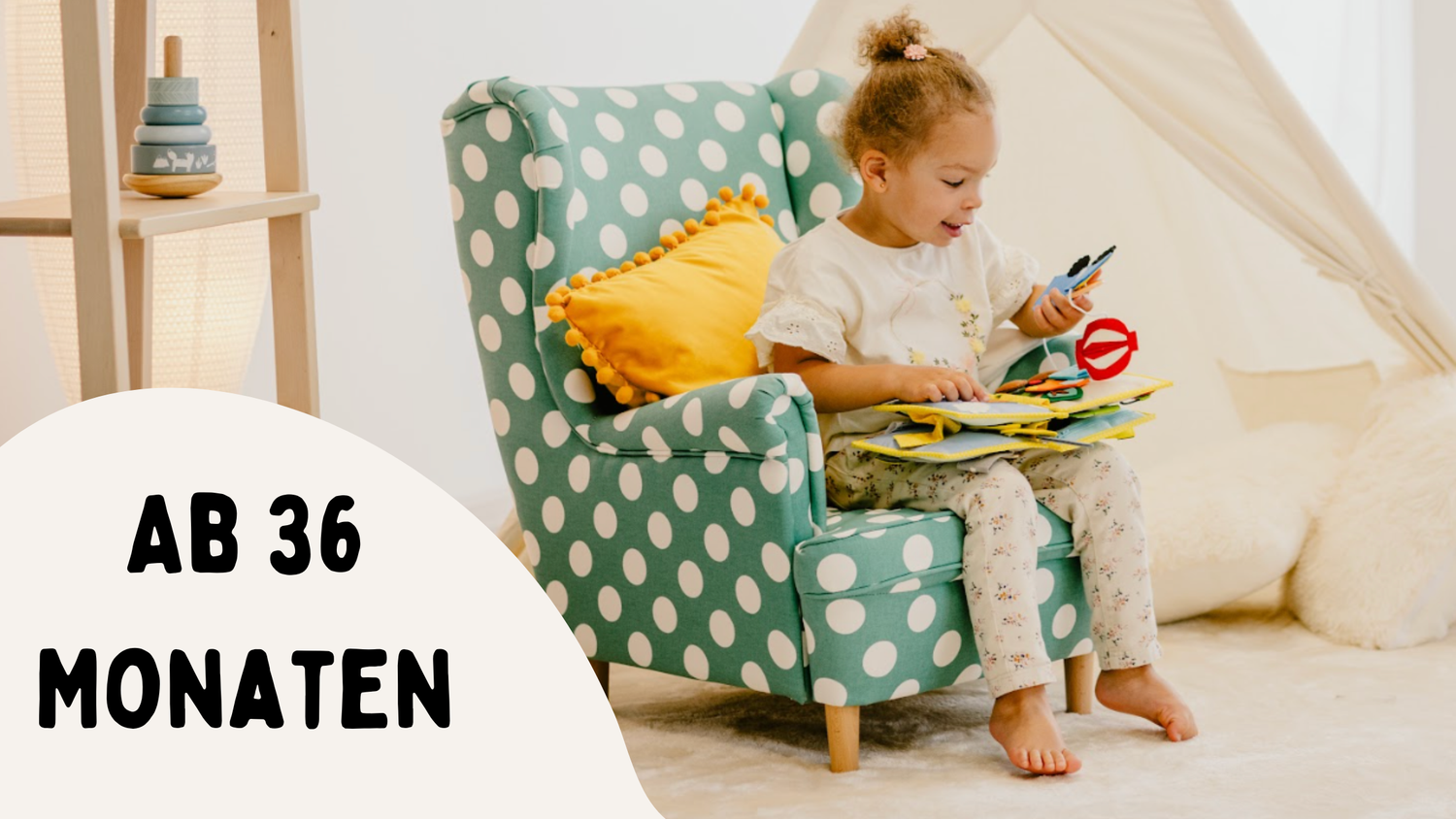
Child Development from 36 Months: Deepening Thinking, Creativity & Fine Motor Skills
In brief
- From three years of age, children think ahead, compare, and try out their own solutions.
- Imagination blossoms: play becomes more complex, freer, and embedded in self-created worlds.
- Children want to understand why something works – and tinker until it does.
- Open-ended materials that adapt to the child's ideas, not the other way around, are ideal.
From around three years of age, children develop an increasingly better understanding of connections, rules, and structures. They think ahead, compare, sort, and consciously try out different solutions. At the same time, their imagination grows: play becomes more complex, freer, and often embedded in their own little worlds.
During this phase, versatile, open-ended play impulses support your child's development by combining fine motor skills, concentration, logical thinking, and creativity.
What happens from 3 years of age?
Children from 36 months can concentrate longer, approach tasks more structured, and enjoy consciously organizing or changing things.
Typical developmental steps in this phase are:
- targeted sorting, stacking, and combining
- confident handling of small objects
- recognizing colors, shapes, and quantities
- first strategic problem-solving approaches
- longer, deeper play phases
- pronounced imagination and independent storytelling
Fine motor skills and thinking now work closely together. Children want to understand why something works – and keep trying until they find their own solution.
By the way: This is also the peak time for role-playing and imaginative games. You can read why "The Floor is Lava" is so valuable in Imaginative Games That Make Children Strong.
How learning toys meaningfully support development
Learning toys should now be open-ended and offer many play possibilities. It is important that they adapt to your child's pace and ideas – not the other way around.
Meaningfully designed learning toys support:
- fine motor skills and hand-eye coordination
- concentration and perseverance
- logical thinking and problem-solving
- understanding of colors and shapes
- creative, free play
Play offerings that enable both structured tasks and imaginative play are particularly valuable.
Recommendation from 36 months: Stacking Tower "Kullerbunt"
The "Kullerbunt" stacking tower is more than just a toy – it's a colorful learning companion for small hands. Six soft felt bowls in rainbow colors invite stacking, sorting, and combining. The set is complemented by 28 matching felt balls and wooden tweezers for first attempts at grasping with tools.
Whether sorted by color, built into a tower, or used as an imaginative play world – "Kullerbunt" adapts to your child's play ideas. It promotes:
- fine motor skills and hand-eye coordination
- playful learning of colors and shapes
- building concentration and perseverance
- stimulating creativity and free thinking
Particularly practical: After playing, everything can be stored in the included fabric bag – ideal for tidiness in the children's room or for on the go.
And for quiet moments: the Calmi Cubes
From three years of age, we also recommend our Calmi Cubes: small, quiet sensory cubes made of felt that help children calm down and focus. A silent anchor for exciting moments – in kindergarten, on the go, or later when starting school. We developed them together with an occupational therapist.
Simple play ideas from 36 months
1. Sorting colors. Felt balls are assigned to the appropriate bowls or sorted by color rows. Promotes: color learning, concentration, logical thinking. More on this in The Art of Sorting.
2. Stacking Challenge. How high can the tower be built? Which order holds best? Promotes: fine motor skills, problem-solving, patience.
3. Creating fantasy worlds. The bowls become mountains, houses, or small landscapes – the balls become figures or treasures. Promotes: creativity, free play, language.
The most important thing at the end
From three years of age, children learn by thinking, experimenting, and creating. Open-ended play materials give them space to develop their own ideas – and to be proud of their solutions.
And that's what it's all about: not about doing it "right," but about your child experiencing that they can achieve something themselves.
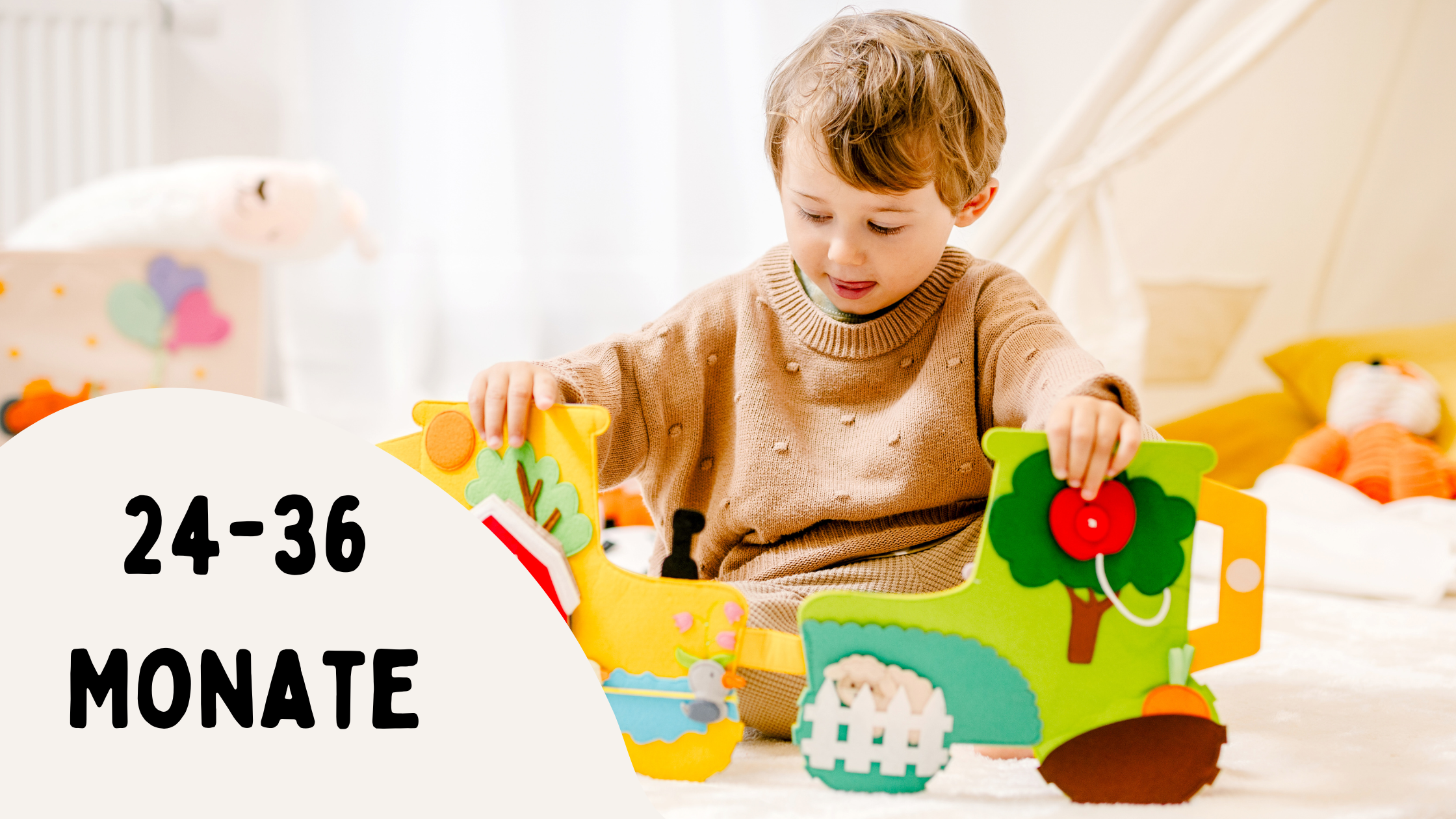
Back to Child Development 24–36 Months · Read from the beginning: Baby Development 0–6 Months

Leave a comment
All comments are moderated before being published.
This site is protected by hCaptcha and the hCaptcha Privacy Policy and Terms of Service apply.