


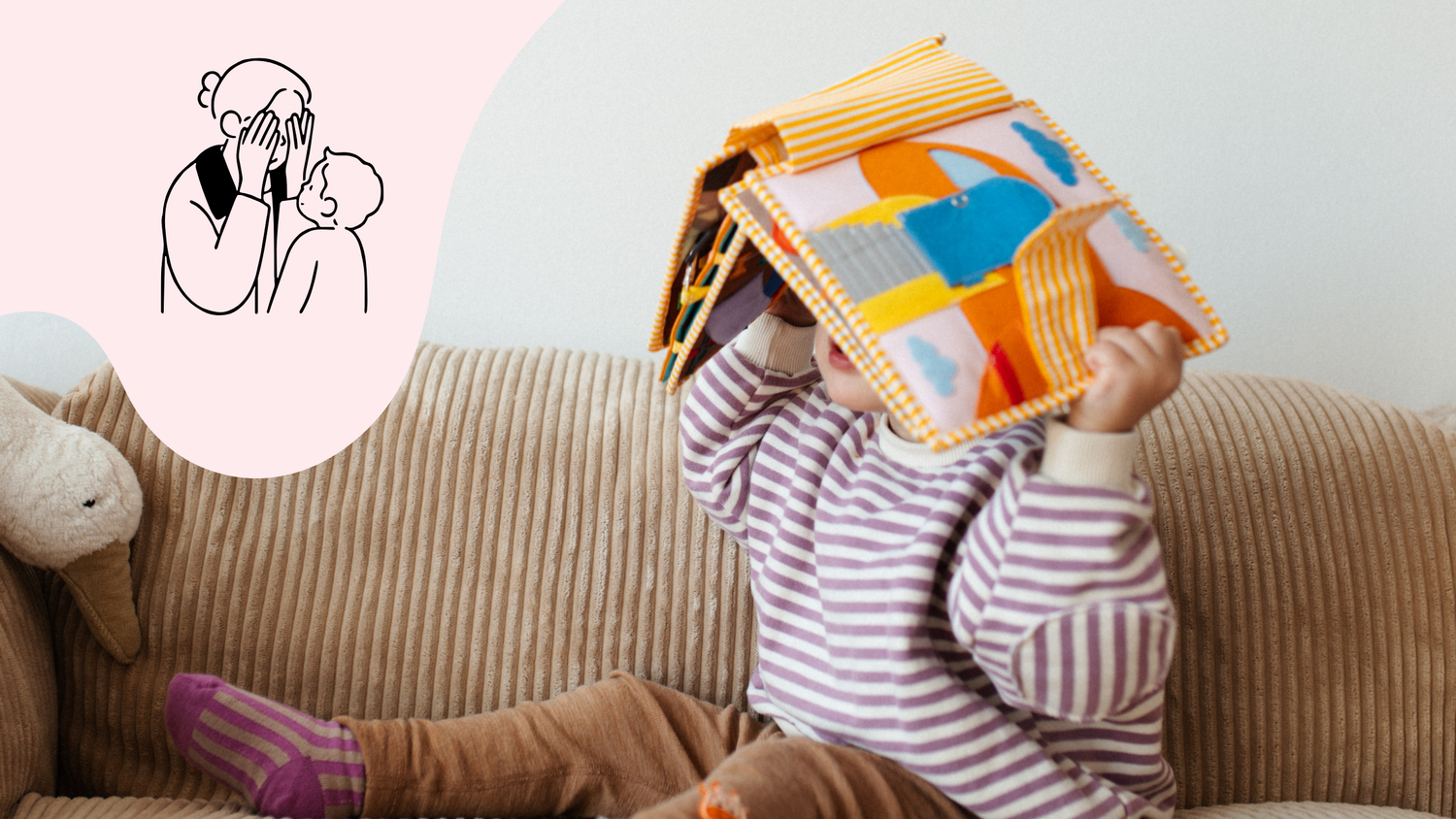
Peek-a-boo, there you are!
In Brief
- The peek-a-boo game is more than just fun: it promotes an important developmental stage – object permanence.
- Your baby learns: Whoever disappears briefly will return. This provides security and trust.
- Peek-a-boo games can be incorporated into everyday life anywhere – while getting dressed, behind a door, with a cuddly toy.
- Our Quiet Books are also full of flaps and hidden surprises to discover again and again.
Sometimes it's the simplest games that work the greatest wonders. A cloth, two hands – and a baby laughing, squealing, and beaming with joy when mom or dad suddenly "reappears". The classic peek-a-boo game is one of those small rituals that connect generations – and in a truly magical way, foster your child's development.
Because behind every "Peek-a-boo, there you are!" lies much more than a sweet moment: an entire world of discoveries, emotions, and important developmental steps.
Why babies love the peek-a-boo game so much
Perhaps you've already noticed it: A little finger hesitantly lifts a fabric flap, a curious glance peeks out from underneath – and then the radiant smile when a hidden animal or a small car reappears. This tension between "gone" and "back again" is incredibly exciting for babies. It's their first little adventure of anticipation and resolution.
What your baby learns: Object permanence
As cute as the game is – a real milestone lies behind it. Experts call it object permanence: the realization that things and people continue to exist even when they are not currently visible.
For very young babies, something that disappears from view is initially simply "gone". Between eight and twelve months of age, they gradually begin to understand: Mom hasn't disappeared, she's just behind the cloth for a moment – and she'll come back. The peek-a-boo game practices precisely this experience again and again.
And that is so valuable because it goes far beyond fun: your baby learns trust. "Even if you're gone for a short time, you'll come back." This basic trust is an important building block for security and attachment. You can read how your child develops during this time in Baby Development 6-12 Months.
Peek-a-boo games for everyday life
The beauty of it: Peek-a-boo games can be incorporated anywhere and turn every routine into a small adventure.
- 🧤 While getting dressed, briefly hide the little hands in the sweater and happily bring them out: "There you are!"
- 🚪 Disappear behind a door, wait a moment, then peek out – pure excitement.
- 🧸 Hide a cuddly toy under a pillow and search for it together: "Where did Teddy go?"
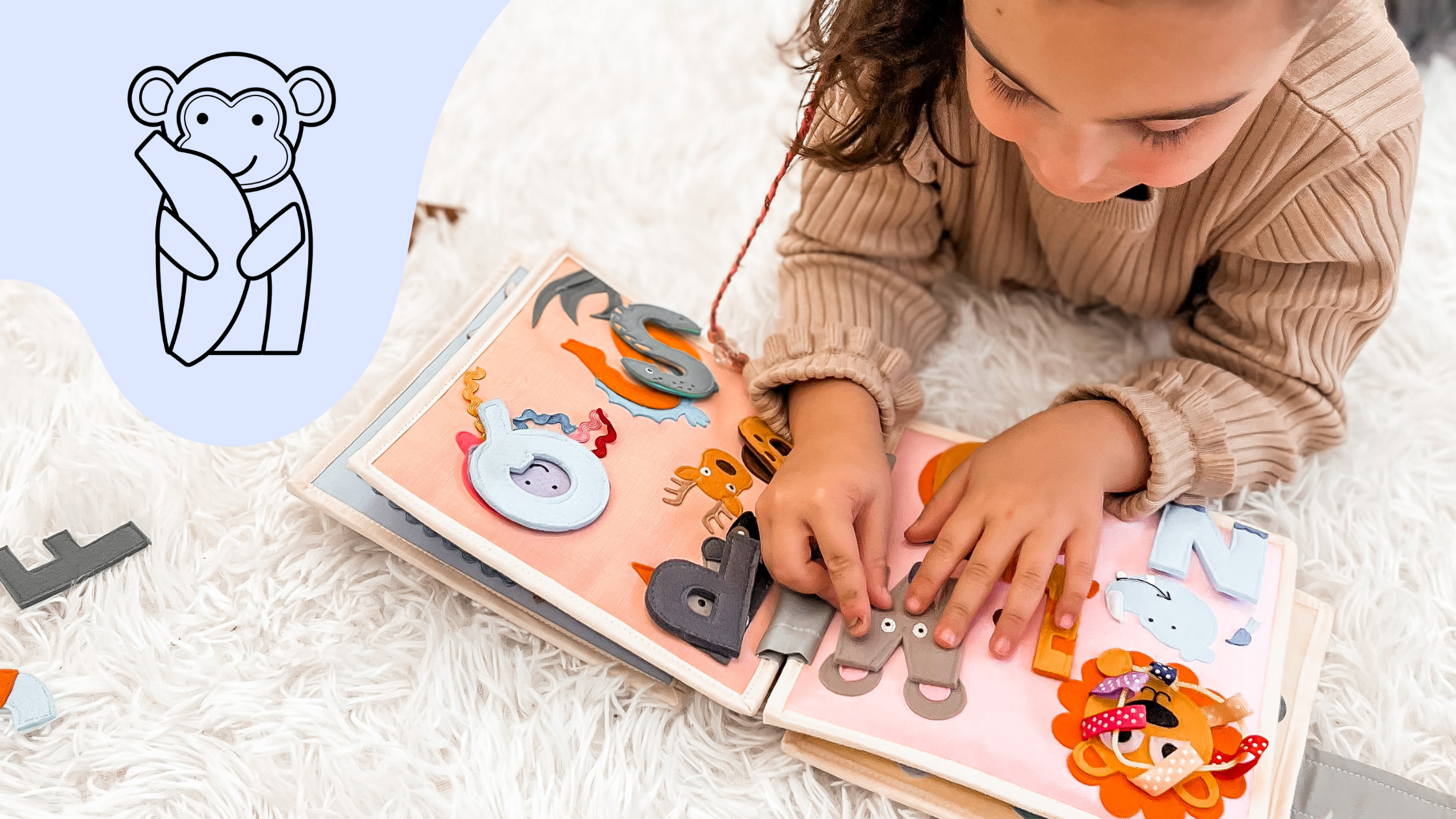
- 📚 With a Quiet Book, where a little surprise awaits behind every flap.
Peek-a-boo in our Quiet Books
It's no coincidence that so many of our Quiet Books integrate such surprise moments: movable flaps, hidden animals, and small doors, behind which there's always something new to discover.
These two are particularly designed for peek-a-boo games:
- Peek-a-Boo – Mini Quiet Book (from 6 months): The name itself says it all. The little bear covers his eyes, chicks and an owl hide behind the flaps, and when the egg opens, the chick peeks out – a whole book full of "Peek-a-boo!" moments that incidentally promotes object permanence.
- Pastel Young Owl – Quiet Book: With flaps and movable elements for constant reappearing – delicately designed in soft pastel shades.
In our design, we always keep in mind that children need small, hidden adventures to take big steps in thinking, feeling, and understanding.
Thus, every "Peek-a-boo, there you are!" becomes a small treasure moment – and a significant step on one of your child's first great journeys of discovery.
Small flaps, big joy: Discover our handmade Quiet Books – full of hidden surprises that will make your baby beam with delight again and again. 💛


Leave a comment
All comments are moderated before being published.
This site is protected by hCaptcha and the hCaptcha Privacy Policy and Terms of Service apply.