



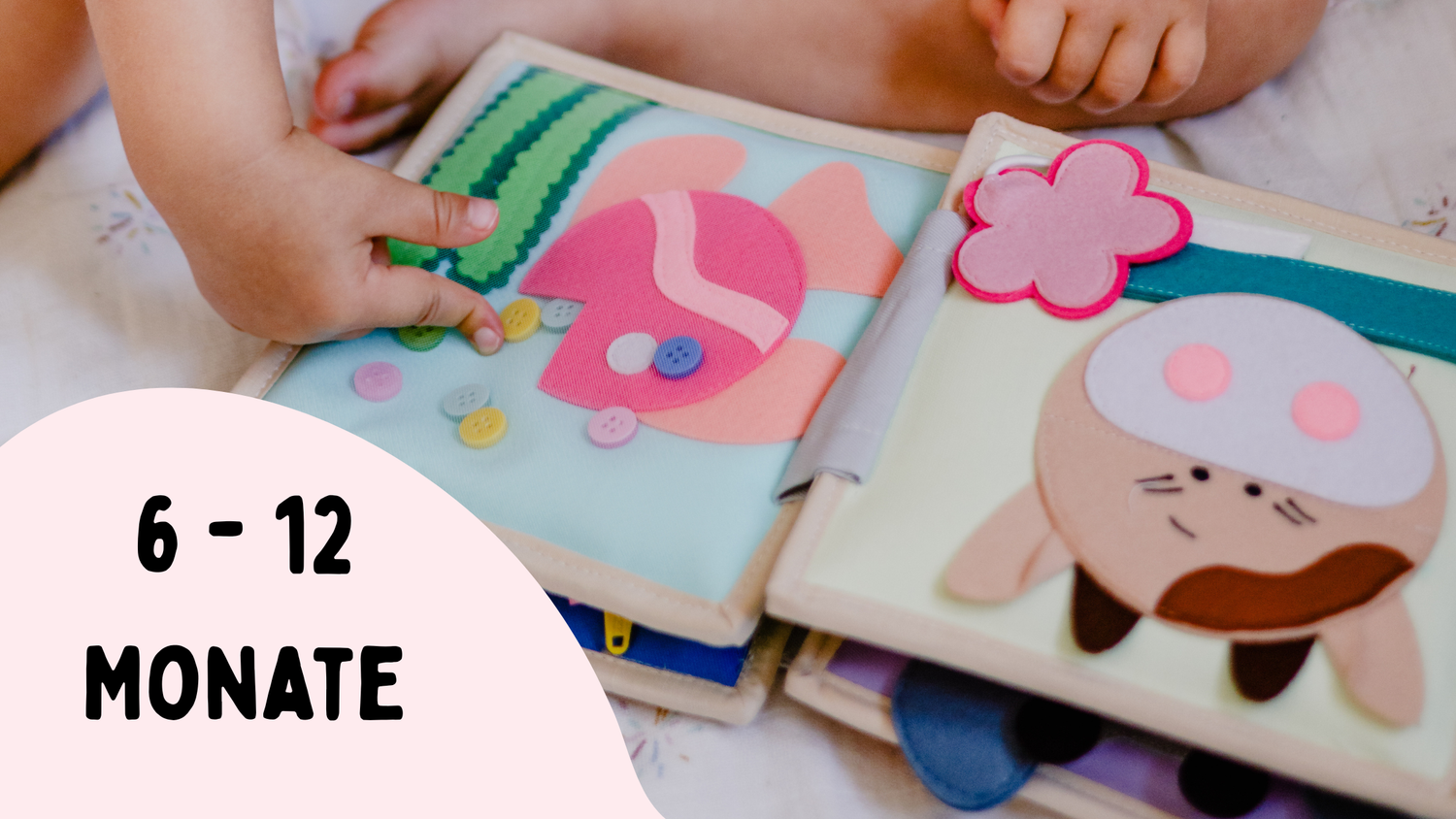
Baby Development 6–12 Months: Playfully Promoting Motor Skills & Exploration
In Brief
- Between 6 and 12 months, your baby becomes more active: grasping, rolling, sitting, crawling.
- They begin to understand cause and effect – and deliberately repeat actions.
- Repetition is not random, but learning. Allow it.
- Good educational toys invite self-directed activity without overwhelming.
An incredible amount happens between the sixth and twelfth month of life. Babies become more active, mobile, and curious. They grasp with purpose, roll over, start crawling, and increasingly want to try things out for themselves to see how they work.
This phase is characterized by discovery, repetition, and first small successes. Calm, thoughtful play stimuli support your baby's development by playfully promoting motor skills, perception, and early logical thinking – without overwhelming them.
What happens in development between 6 and 12 months?
At this age, fine motor skills, gross motor skills, and the understanding of cause and effect develop particularly intensely. Babies use their hands more purposefully and begin to consciously repeat actions.
Typical developmental steps in this phase include:
- purposeful grasping and holding
- passing objects from one hand to the other
- pulling, pushing, turning, and opening
- intentionally dropping things
- increasing mobility (rolling, sitting, crawling)
- longer attention spans
Babies now learn primarily through active doing. Repetition plays a central role: what is interesting once is tried again and again – an important process for brain, motor skills, and coordination.
By the way: During this time, babies also understand that things continue to exist even when they are not visible. Why they love the peek-a-boo game so much can be read in What your baby really learns from peek-a-boo.
How educational toys meaningfully support development
Educational toys for babies from 6 months should invite them to be active themselves – but remain clearly structured and easy to understand. This allows your baby to focus and recognize connections.
Thoughtfully designed baby learning toys support:
- fine motor skills
- hand-eye coordination
- understanding of cause and effect
- concentration ability
- independent discovery
Play activities that enable various motor actions and give your baby space to explore things at their own pace are particularly valuable. This is exactly what our Mini Quiet Books are made for: one clear task per page, soft materials, and many small movements to practice again and again.
Simple play ideas for babies aged 6–12 months
1. Open-and-Close Game. An element is slowly opened and then closed again. Babies observe first and then try the movement themselves. Promotes: fine motor skills, understanding of cause and effect, concentration.
2. Grasp & Repeat. An easy-to-grasp play element is offered. Babies grasp, let go, and grasp again – often many times in a row. Promotes: muscle strength in hands and fingers, coordination.
3. Quiet Discovery Time. A single page is looked at together. Calmly naming what is happening supports perception and attention. Promotes: perception, concentration, early language stimulation.
You can find more exercises for little hands in Promoting fine motor skills: 12 exercises and games.
The Most Important Thing at the End
Your baby doesn't need a full shelf of toys during this phase – but rather time, repetition, and the opportunity to figure things out for themselves. If they open the same zipper for the twentieth time, it's not boredom. It's learning.
And every baby has their own pace. The steps above are a guide, not a schedule.
We show you which toys are specifically suitable for this phase in Toys from 6 months: What little explorers need.

Leave a comment
All comments are moderated before being published.
This site is protected by hCaptcha and the hCaptcha Privacy Policy and Terms of Service apply.