



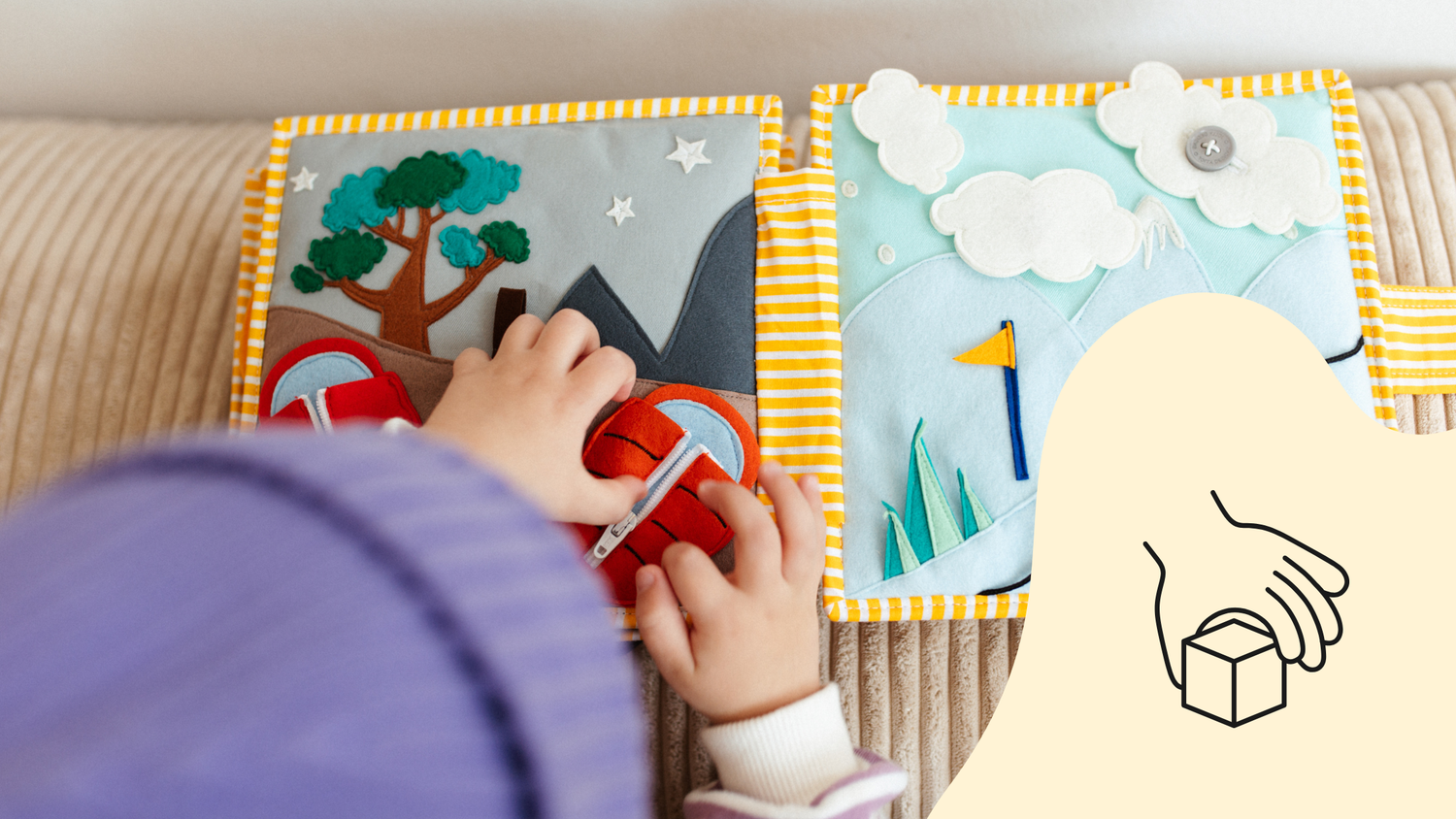
Promoting Fine Motor Skills: 12 Simple Exercises and Games for Little Hands
Promoting fine motor skills sounds like therapy and developmental workbooks – yet the best development happens incidentally: when picking up peas, struggling with zippers, or messing around with a spoon. It's precisely in these small everyday moments that your child trains the delicate movements of their hands, which they will later need for drawing, crafting, dressing, and writing.
In this article, you'll find twelve simple ideas to playfully strengthen your child's fine motor skills – without expensive materials, without pressure, and completely screen-free. Plus, some tips on what to look out for and when there's no need to worry.
What are fine motor skills – and why are they so important?
Fine motor skills are the ability to perform small, precise movements with the hands and fingers: grasping, turning, pressing, releasing. They are the quiet foundation for an incredible number of everyday things that later seem self-evident to us.
If your child learns to grasp a small bead with their thumb and forefinger today, they are practicing the same grip they will need in a few years to hold a pencil. Children who tinker a lot with their hands early on will find it easier to write, tie their shoes, and become independent later. That's why it's worth promoting fine motor skills early – not with ambition, but with opportunities.
When do fine motor skills develop?
Roughly as a guide, without a stopwatch:
- 0–6 months: Hand opens, grasps randomly, brings objects to mouth.
- 6–12 months: Targeted grasping, transferring objects from one hand to the other, first pincer grasp.
- 12–24 months: Stacking, placing in, taking out, first zippers and large buttons.
- 2–3 years: Scribbling, threading, unscrewing, sorting small parts.
Every child has their own pace. This range is a framework, not a test plan. You can find more about this phase in our article Child Development 12–18 Months.
12 ideas to playfully promote fine motor skills
The beauty is: you don't need a special program for this. Most of these ideas fit into a normal day.
In the kitchen
- Let them transfer things. Two bowls, some pasta or beans – your child scoops, tips, pours. Pure concentration.
- Mess with a spoon. Yogurt, porridge, water: spooning trains wrist and grip strength, even if half of it ends up next to the bowl.
- Press and tear dough. Soft dough for kneading strengthens the whole hand.
When getting dressed
- Let them pull the zipper themselves. Frustrating at first, then a huge moment of pride: "I'll do it myself."
- Practice large buttons. On a jacket or a practice piece – opening is easier than closing, so start there.
- Velcro open and close. Shoes with Velcro fasteners are secret fine motor trainers.
When playing
- Sorting by color or shape. Sorting buttons, building blocks, small animals into cups. You can read why this is so beneficial in The Art of Sorting.
- Threading. Large beads onto a string or pasta onto a thread.
- Peeling and sticking stickers. Small, underestimated, highly effective for the pincer grasp.
- Pegging and stacking. Nesting cups, towers, simple shape sorters.
For on the go and quiet moments
- Exploring small flaps and pockets. Opening something, reaching in, closing it again – ideal for waiting rooms and car rides.
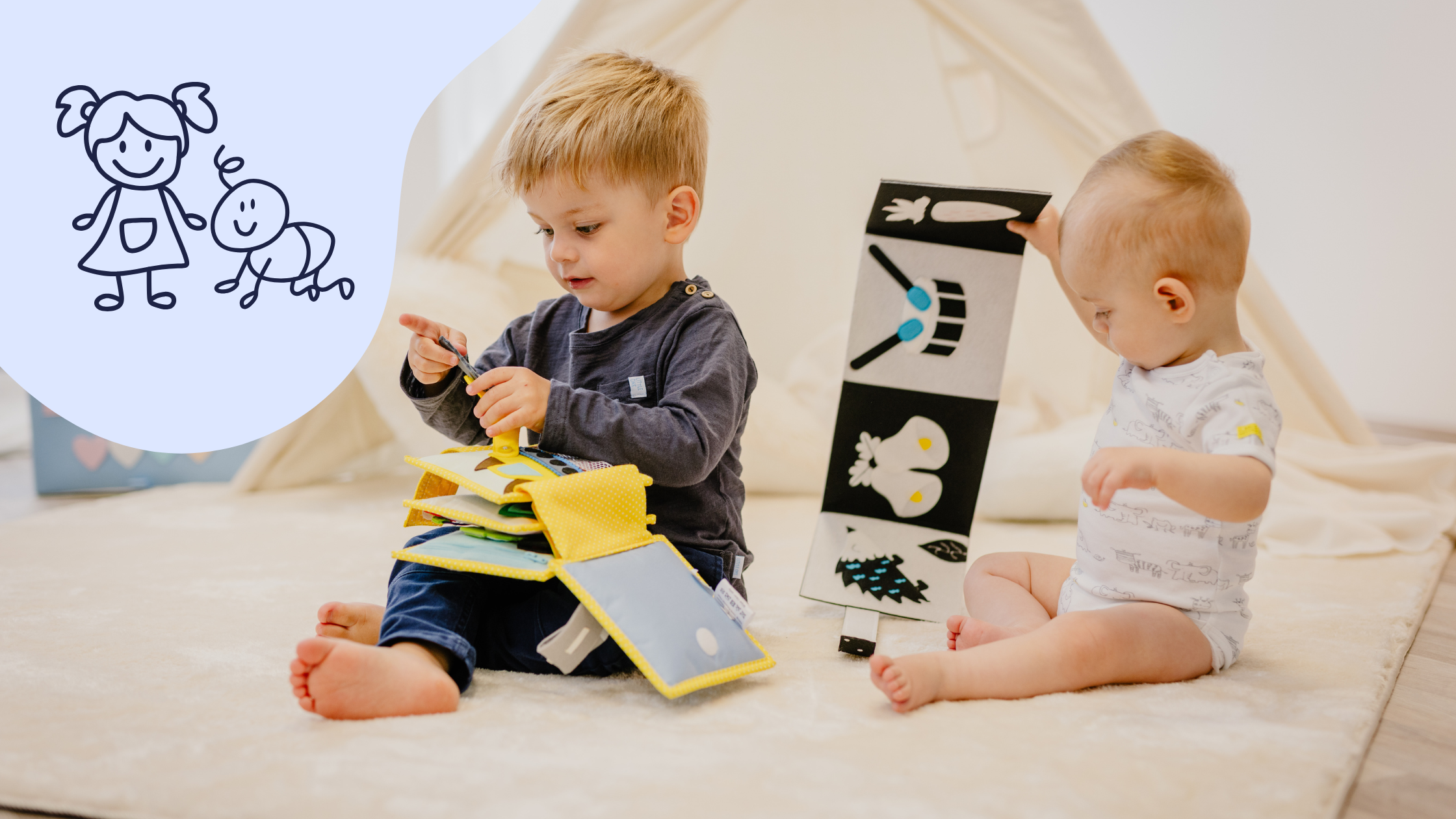
- A Quiet Book. Almost all the exercises above are bundled on a few felt pages: zippers, buttons, shapes, strings.
Why Quiet Books are ideal for promoting fine motor skills
The reason we at Jolly Designs believe so much in our Quiet Books: They do exactly what fine motor skill development needs – many small, real hand movements in one place.
Each page is its own little task: a zipper that opens and closes. A button that needs to go through a hole. A string for threading, shapes for sorting. Your child repeats these movements as often as they like – and each repetition strengthens the fine muscles in their fingers and hand.
Our books are hand-sewn from soft felt and accompanied by a team of experts, including an occupational therapist who works with children's hands daily. They are TÜV Rheinland certified, grow with your child, and are not disposable toys that disappear into a basket after a few weeks. For the little ones, there are the handy Mini Quiet Books; for older children, the full Quiet Books from 12 months.
How to recognize that fine motor skills are developing well
No need to compare with the neighbor's child – but a few nice little signs:
- Your child purposefully grasps small objects (pincer grasp).
- They start putting things into containers and taking them out again.
- They try out zippers, buttons, and Velcro, even if they can't quite do it yet.
- They stay engaged with a hand activity for a while.
If you feel that your child is significantly behind for an extended period or has great difficulty with movements, talk to your pediatrician or an occupational therapist. This is not an alarm, but simply the right way to gain peace of mind.
Frequently asked questions about promoting fine motor skills
When can I start promoting my baby's fine motor skills? Already in the first few months – through grasping, feeling, and different materials. Targeted exercises like sorting or threading come in around one year of age.
Which toys best promote fine motor skills? Anything for grasping, pegging, sorting, threading, and opening/closing. Quiet Books, shape sorters, threading beads, and simple everyday items like spoons and bowls are ideal.
How much time should I set aside daily? No fixed time is necessary. Fine motor skills are best encouraged incidentally – a few minutes here, a zipper there. Regularity beats length.
What do fine motor skills have to do with writing? The pincer grasp that your child practices today when grasping small objects is the direct precursor to holding a pen later. Promoting fine motor skills also means preparing for tomorrow's writing.
Want to incidentally promote your child's fine motor skills? Discover our handmade Quiet Books – each page a small exercise for little hands, completely screen-free.


Leave a comment
All comments are moderated before being published.
This site is protected by hCaptcha and the hCaptcha Privacy Policy and Terms of Service apply.